


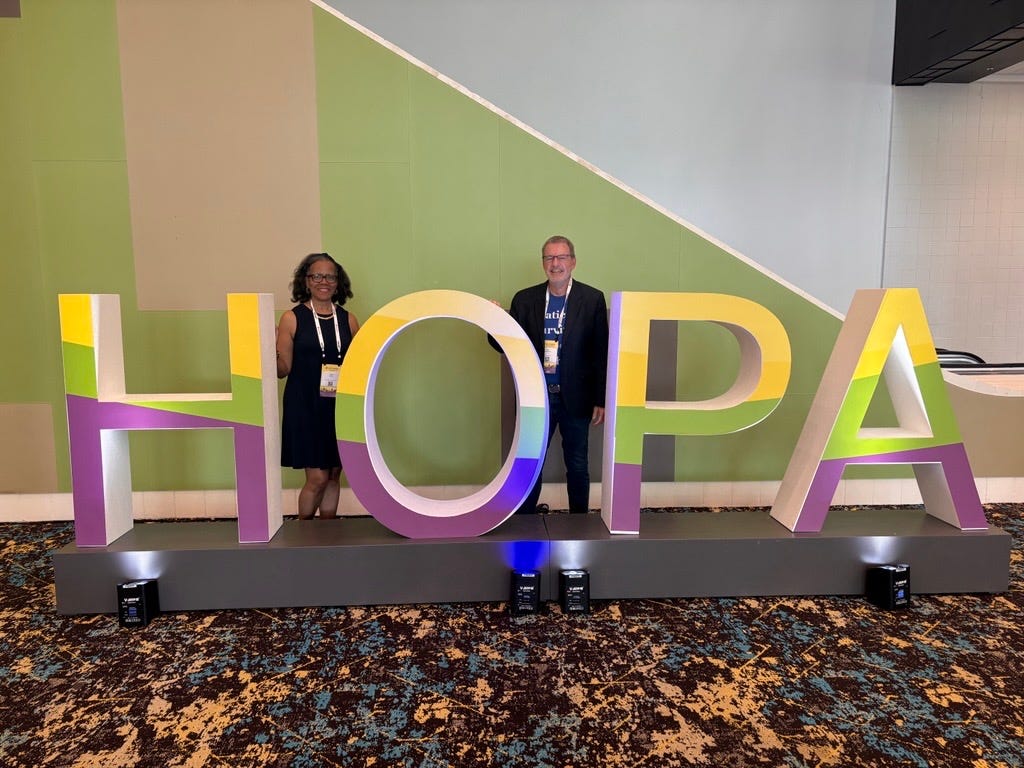
A few weeks ago, I attended the HOPA Annual Conference for the first time as a member of their Patient Advisory Panel. I didn’t know a soul. I had no idea what to expect. And honestly? My relationship with clinical oncology pharmacists had been almost nonexistent — I think I spoke with mine once during my entire 2.5 years of chemotherapy.
I walked in as an outsider. I walked out with three things that will shape how I show up at every conference going forward — with HOPA and beyond.
The Advocacy Session Spoke My Language
One of the first things that grabbed me was the advocacy session, which tackled issues that patients deal with every single day. Step therapy — where insurance companies require you to try one drug, then another, before they’ll approve the medication your doctor wanted to prescribe from the very beginning, was front and center.
This wasn’t abstract policy talk. This is something I’ve heard from patients in every community I’m part of. And it’s something that organizations like the PAN Foundation have been fighting alongside patients for years. Hearing it echoed in a room full of clinical pharmacists told me something important: the people on the clinical side of medicine are paying attention to the same things we are.
Financial Toxicity — and a Perspective I Didn’t Expect
I’ll be honest. As patients, we often carry a complicated relationship with the system — insurance companies, pharmaceutical companies, even our own doctors and pharmacists. They feel like part of the machine that makes getting well so expensive.
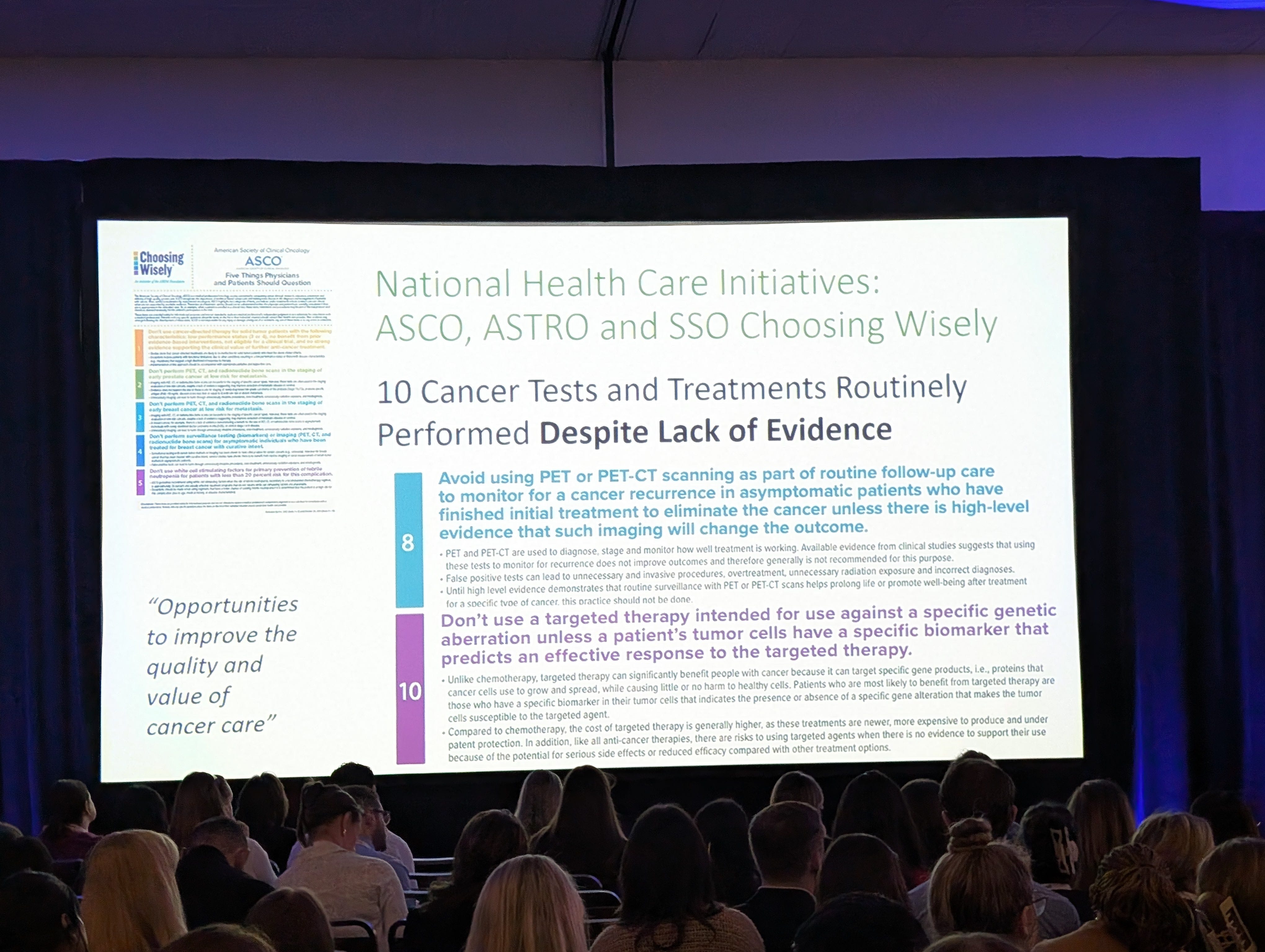
But what I witnessed in these sessions on financial toxicity reframed something for me. These clinical oncology pharmacists were passionate. They were talking about the changing prescription landscape, tools like GoodRx and Mark Cuban’s Cost Plus Drugs. They were raising concerns about unnecessary tests and procedures that get routinely ordered without strong scientific evidence behind them.
“It was not only eye-opening to learn about these issues — it was comforting to know that these pharmacists are on the side of patients.”
I came in with some walls up. I left those sessions with those walls down. We have more allies in the clinical world than we sometimes realize.
Science Fair, But Make It Medical Research
Remember your middle school science fair? Poster boards. Tri-folds. Standing nervously in the gym hoping someone would stop and ask about your project?
Conference posters are the professional, peer-reviewed version of exactly that, and I was not prepared for how much I would enjoy them. Many of the posters at HOPA were dense with clinical data and terminology I’m still working to fully understand. But not all of them. Some were remarkably accessible. And the more time I spent walking the room, the more I found myself drawn in.
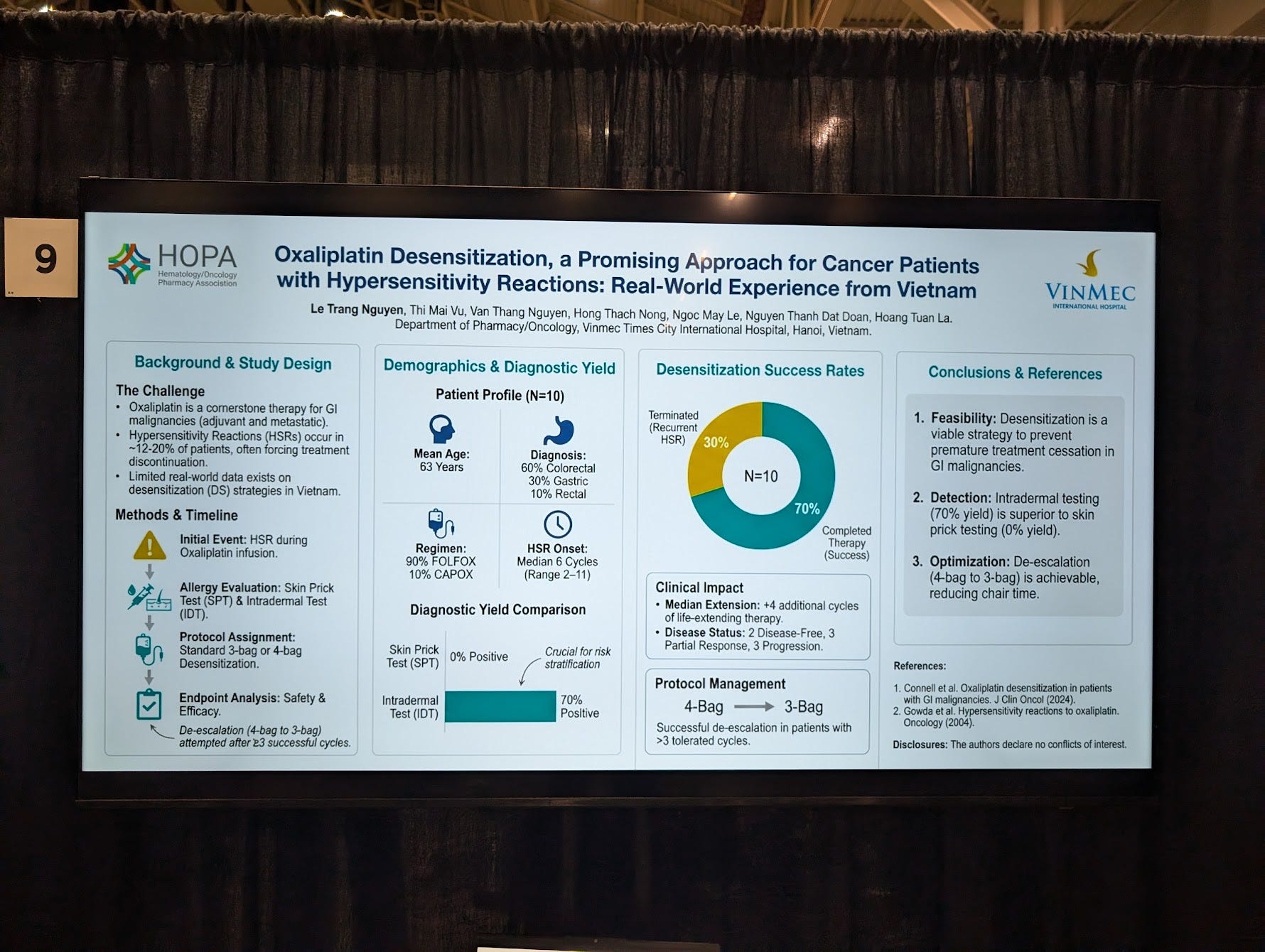
One poster stopped me in my tracks. It focused on a common colorectal cancer chemotherapy that many patients have severe reactions to, reactions serious enough that they can’t use it at all. The research presented showed that when these patients were given very low doses and the amount was gradually increased over time, they were able to tolerate the treatment they’d previously been unable to receive.
Is this a cure? No. Is it groundbreaking on its own? Maybe not. But if this research opens the door to more studies that give more patients access to another line of treatment, that is genuinely exciting. That is hope in the form of data.
Above all, this conference reminded me of something I already believed but needed to feel again in a room full of people I’d never met: there is extraordinary power in what happens when patients and providers come together.
We don’t always speak the same language. We don’t always see the system through the same lens. But when we’re willing to sit in the same room, listen to each other, and find the shared ground — that’s where real advocacy begins.
I’ll be back next year. And I’ll walk in with a little less uncertainty and a lot more intention.
I absolutely LOVE our pharmacists- they have the best clinical minds and are so smart! We are so blessed to have a dedicated Board Certified Oncology Pharmacist in each clinic room. They are behind the scenes and instrumental in so many clinical decisions. They know so much about each patient but usually only meet with them face to face to provide treatment education. Pharmacists are priceless!
This was so interesting! Thank you for sharing.