


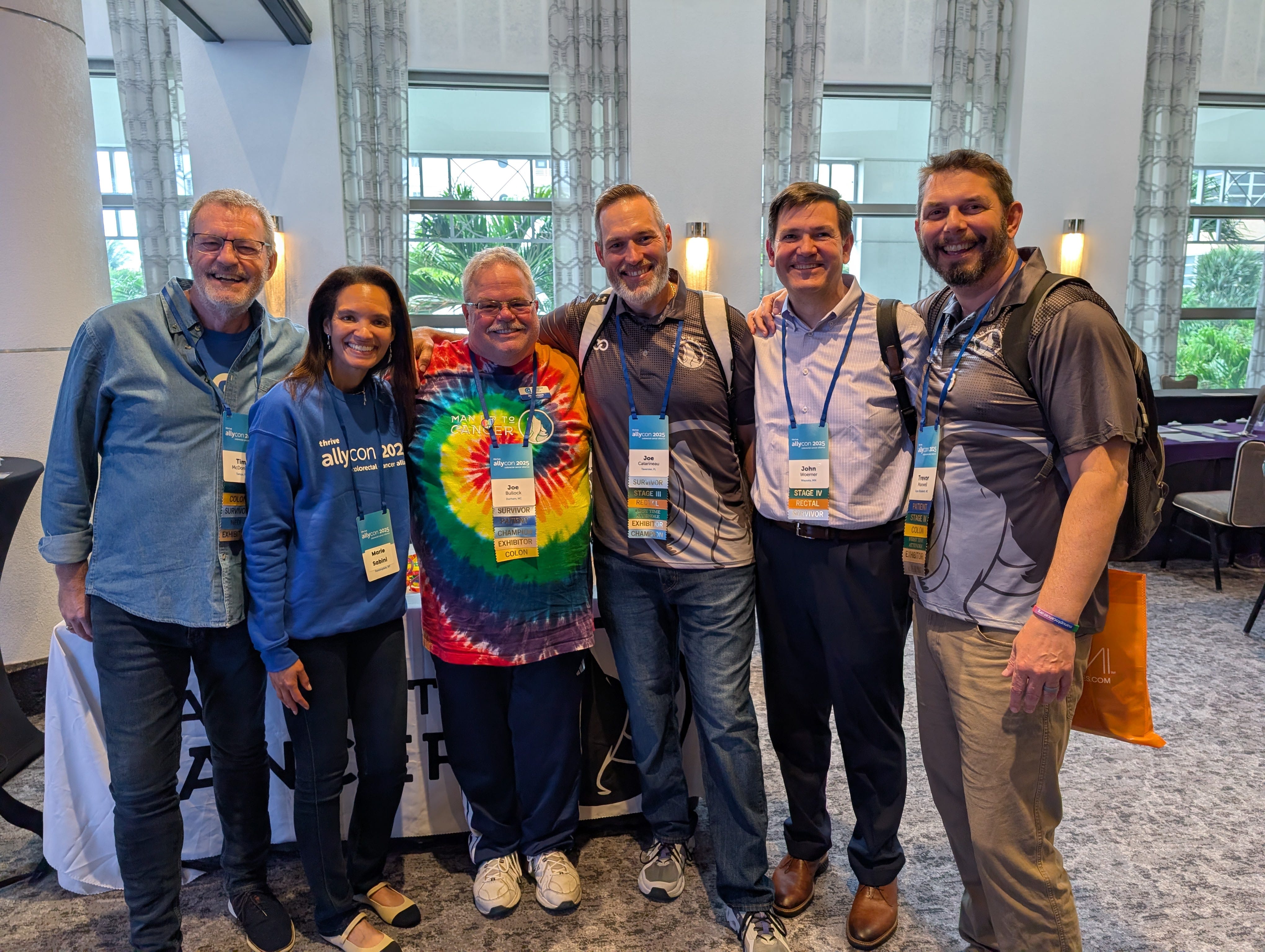
The fluorescent lights of the Miami Beach conference center cast the same warm glow they had the year before. Different hotel, same ocean breeze drifting through the lobby, same branded banners announcing Allycon, the Colorectal Cancer Alliance’s annual gathering. The same buzz of conversation filled the halls during breaks. But this year, the spaces between those conversations felt heavier. Chairs that should have been filled sat empty, their absence louder than any keynote speech.
In a community like ours, loss is always present. I know many others were grieving people who should have been there, people whose absence they felt just as keenly as I felt mine. But for me, three losses hit particularly close. Two friends had died in the months leading up to the conference. Another couldn’t make the trip, her health declining in ways we all understood but nobody wanted to name out loud. As I moved through the weekend, introducing myself to new advocates and reconnecting with familiar faces, I kept catching myself looking for people who weren’t there. People who wouldn’t be there again.
It’s been five years since I started down this path. Back then, I didn’t even call it advocacy, I told people I was just “creating awareness,” as if that semantic difference somehow made it less intimidating, less official. I was new to this world, learning the language, figuring out how to tell my story in ways that might help others tell theirs. I looked up to the veteran advocates, the ones who seemed to have it all figured out, who could navigate these spaces with confidence and purpose.
Somewhere along the way, without me quite noticing, something shifted.
Now people ask me questions. They want to know how I got started, how I balance advocacy with work, how I keep going when it gets hard. They introduce me to others as someone who “does amazing work” or who “they should really talk to.” The role I’ve been playing has changed, and I’m not entirely sure when it happened. I’m no longer just looking up to others. Others are looking up to me.
That realization hit me hard in Miami Beach, maybe because it arrived alongside grief.
As I shared my feelings about the losses with people I was meeting for the first time, I kept returning to a thought that helped me make sense of it all: if I’m going to be upset that cancer took these people from me, then I have to acknowledge that cancer is also what brought them into my life in the first place. It’s an uncomfortable truth, one that doesn’t resolve neatly or make anything fair. But it’s true nonetheless.
I am grateful for the time I got to spend with them. For the conversations that ranged from the deeply practical to the beautifully absurd. For the lessons they taught me, sometimes intentionally and sometimes just by how they showed up in the world. For the way they made me laugh when I needed it most, and made me think when I would have preferred not to.
This gratitude doesn’t make the loss easier. Let me be clear about that. The grief is still sharp. The holes they left behind are still there. But acknowledging this paradox—that the same disease that took them is also what connected us—helps me process the loss quicker and in a way that feels healthier for me. It lets me hold both truths at once: that I miss them terribly, and that I’m grateful we had the chance to know each other at all.
Five years into this work, I’m learning that advocacy isn’t a linear journey from novice to expert. It’s more like a spiral, where you keep passing the same landmarks but from different vantage points. The questions don’t really change. How do we help? How do we honor those we’ve lost? How do we keep going? But the perspective shifts. What you once looked up to see, you now look across at, or find yourself helping others look toward.
I think about the newer advocates I met in Miami Beach, the ones just starting to tell their stories, just beginning to figure out what their version of this work will look like. I see myself in them from five years ago. And I realize that part of my role now is to be for them what those veteran advocates were for me: someone who shows that this path is walkable, that the work matters, that the community will hold you even when, especially when, it has to hold your grief.
The empty chairs were a reminder that advocacy in the cancer space is always shadowed by loss. Everyone there was carrying their own grief, missing their own people. We advocate alongside people who are sick. Some get better. Some don’t. We form friendships knowing that time might be limited, that every conversation could matter more than we realize in the moment. And still, we show up. We keep building these connections, knowing full well what we might lose.
Because the alternative—not connecting, not building community, not learning from each other—would mean letting cancer take even more from us. It would mean letting it isolate us in addition to everything else it does. And I refuse to give it that power.
So yes, I’m shifting into a new role. One where I’m no longer just learning from others but helping others learn. Where my five years of experience, still modest in the grand scheme, might be exactly what someone needs to take their first steps. Where the lessons I learned from those who are gone get passed forward, kept alive in how I engage with those who are just beginning.
The grief comes with the territory. So does the gratitude. And somehow, holding both of those things together feels like the most honest way to honor everyone who’s been part of this journey—those who are still here, and those who aren’t.
Cancer brought them into my life. I’ll never stop wishing it hadn’t. But since it did, I’m going to make damn sure their impact continues, that the connections we built keep growing through the community we’re all still building together.
That feels like advocacy too. Maybe the most important kind.
Beautiful words, my friend, and definitely where my heart has been this year. Losing the people we love is painful and I am grateful to have met and loved them, knowing full well and ever open to the possibility that love begets loss, and will continue again and again.
Tim this post is all my feels! You stated it so eloquently. The loss is all consuming at times and hard to get past, yet it is the Cancer that brought us all together in the first place. I’m grateful for that, as crazy as it sounds. I have and have had the most amazing humans in my life because of this horrific disease. Somedays are harder than others to keep positive and continue with the advocacy but I know I must, because it’s in my heart and soul to see impactful changes.