


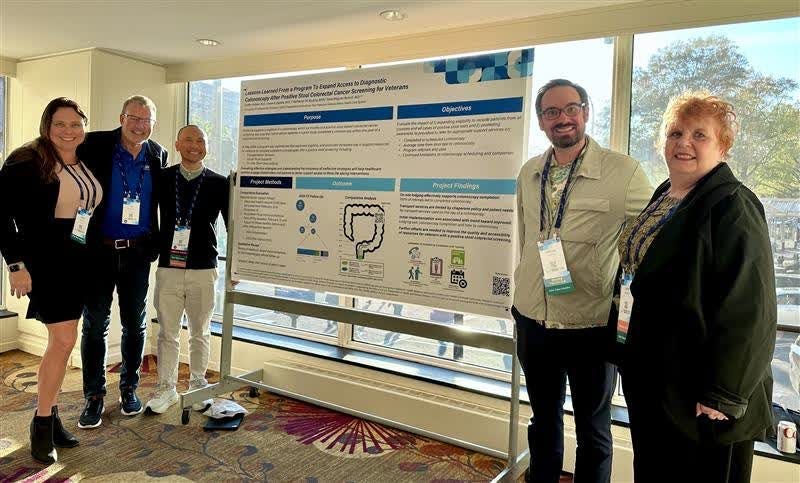
Patient research advocates with Fight Colorectal Cancer and a researcher at PCORI 2025 Annual Conference.
I read ASCO Connection’s article, “Patient Advocacy 101: Working With Patient Advocates in a Research Setting,” and there’s a lot I agree with.
Bring advocates in early. Ask what expertise they bring. Involve them in designing the study, not just recruiting patients. Think about what participation actually requires of someone who is already dealing with cancer.
But when I got to the recommendation to “consider compensating patient advocates as you would other team members,” I stopped.
Consider?
If you’re asking someone to contribute their time and expertise to your research team, you should compensate them fairly, in line with the work you’re asking them to do. Why should that be optional because the person is a patient advocate?
Compensation should be part of the plan
The article describes advocates helping with study design, recruitment materials, barriers to participation, quality-of-life measures, and communicating results.
That’s work. It requires time, preparation, and judgment. Compensation should be in the budget from the beginning, not something to discuss if there’s money left over.
I’m not saying every person on a research team should receive the same rate. I’m saying advocates should be paid using the same standards of time, expertise, and responsibility applied to other people hired for the team.
And reimbursing someone for travel is not the same as paying them for their contribution.
If an advocate wants to volunteer, that’s their choice. But researchers shouldn’t make that choice for them.
What about advocates who aren’t connected to an organization?
The other recommendation that caught my attention was to find advocates through patient advocacy organizations.
That’s a useful place to start. These organizations can provide training, connections, and support. The article doesn’t say they should be the only way researchers find advocates.
But what about the people who aren’t actively involved with an organization? The people who are passionate, knowledgeable, and doing advocacy work independently?
How do they get into the room?
If researchers keep going through the same organizations and networks, those organizations can become gatekeepers, even without intending to. And bringing in several people from an established network doesn’t necessarily mean you’ve included different perspectives.
If inclusion is the goal, we need to look at how advocates are selected, too. Who knows about these opportunities? Who gets recommended? Who never gets considered because they don’t have the right connection?
I’d like to see researchers offer open calls and direct applications alongside organizational referrals. Explain the role. Explain what experience is needed. Give people a way to express interest without needing someone already inside to introduce them.
And if the work requires specific training, provide it and pay people for their time. Not having access to research advocacy training is not the same as having nothing to contribute.
Ask what someone brings before deciding where they belong
One point I really appreciated was Laurie Hutcheson’s recommendation to ask whether advocates have expertise beyond their patient experience.
Being diagnosed with cancer doesn’t erase everything you knew or did before your diagnosis.
Someone may bring years of experience in communications, community building, research, policy, business, or another field. You won’t know unless you ask.
That doesn’t mean an advocate needs a professional résumé to make their lived experience valuable. It means we should stop assuming we already know what someone can contribute because we’ve labeled them “the patient.”
The article also recommends bringing advocates into trial design from the outset. That matters because there’s a difference between helping make decisions and being asked to comment after the decisions have already been made.
Are we asking advocates to help shape the research, or just help carry out someone else’s plan?
There’s more than one way to advocate
Dr. Tanmayi Pai says in the article, “I hadn’t realized that there were so many different aspects of patient advocacy.”
I appreciated her saying that. It’s a conversation worth having more often.
In my book, From Patient to Advocate, I talk about four areas: Awareness, Fundraising, Research, and Legislative advocacy. People can find a place to contribute in one area or work across several.
The article also discusses education and self-advocacy—helping people understand their disease, ask questions, and take a more active role in their care.
We use “patient advocate” a lot, but we aren’t always talking about the same work. Being clearer about those roles helps people find opportunities that fit them. It also helps researchers understand what they’re asking someone to do and what support and compensation should come with it.
Can people actually participate?
The article asks some important practical questions about clinical trials.
Can labs be done locally? Are all the trips to the study site necessary? Can some appointments happen remotely? What happens if someone needs care for a child or dependent adult? Do patients know upfront which costs they or their insurance will have to cover?
These details can determine whether someone can participate at all.
Telling someone they’re eligible doesn’t solve the transportation problem. It doesn’t cover the time away from work or arrange care for someone who depends on them.
Research advocates and trial participants have different roles, but we should be asking practical questions about both: What are we requiring of this person, and what needs to be in place for them to take part?
I was also glad to see the article address sharing results with participants and involving advocates in explaining those results. People should know what came of the research they helped make possible, in language they can understand.
There’s good advice in this article. My push is to take it further.
Pay advocates fairly. Give them a real role in decisions. And make sure the opportunity to contribute extends beyond the people who are already connected.
If we want different perspectives in research, we have to be willing to look beyond the people we already know.
Great article Tim!
Very well said, Tim. Patient research advocates are an integral part of the research team and must be compensated accordingly, no matter for which cancer you are an patient research advocate. After 13 years as a Stage IV lung cancer survivor and several years as a patient advocate, I am beginning to see many more studies that include a compensated patient research advocate.