


When I heard those three words, “you have cancer,” advocacy wasn’t part of my plan. I was focused on survival, on treatment options, on simply getting through each day. But along this journey, I discovered something powerful: my story matters. And sharing it became the foundation of my advocacy.
How Your Story Becomes Advocacy
At its heart, advocacy is simply the willingness to share your experience to help others. Whether you’re speaking to newly diagnosed patients, talking to legislators, or participating in research discussions, your personal narrative brings authenticity and urgency to the cause.
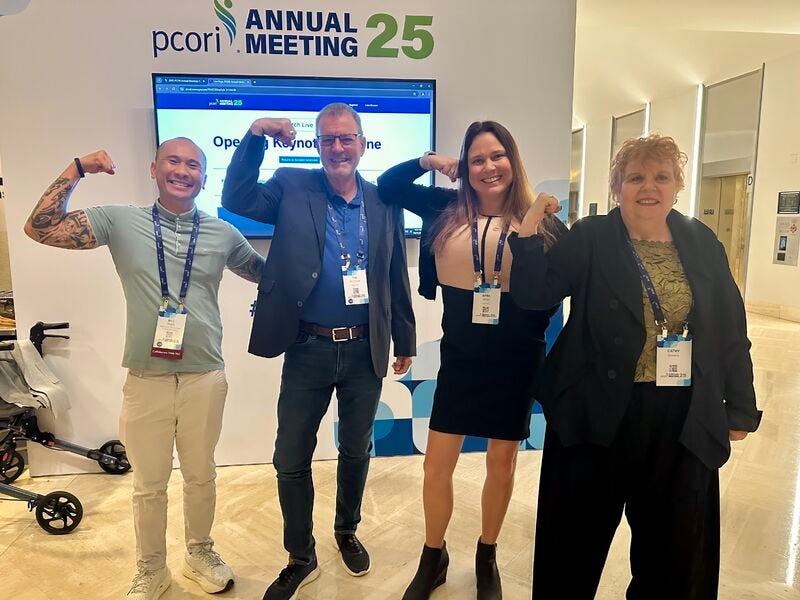
As Bill Thach, a Stage IV rectal cancer survivor and Research Advocate so perfectly put it: “At PCORI, I was reminded that engaged patients aren’t just participants. They are co-creators of research.”
The Four Faces of Cancer Advocacy
Through my journey, I’ve discovered there are different ways our stories can create change:
1. Awareness Advocacy
This is often where many of us begin, but it goes far beyond simply sharing our diagnosis. Awareness advocacy is about:
Being there for the newly diagnosed: Remember how overwhelming those first days felt? When you share your story with someone just beginning their cancer journey, you’re offering something precious—the understanding that can only come from lived experience. You become the person you needed when you were diagnosed.
Encouraging screening and early detection: Your story can literally save lives by motivating others to get screened. When I share the details of my diagnosis, I always emphasize how early detection impacts outcomes.
Helping others advocate for themselves: Too many patients, especially women and minorities, aren’t taken seriously when reporting symptoms. By sharing how you navigated the healthcare system—including when you had to push back against dismissive attitudes—you empower others to advocate for the care they deserve.
Breaking the stigma: Colorectal cancer, like many cancers, comes with stigma that keeps people from discussing symptoms and seeking help. Every time we openly discuss our experience, we chip away at that silence.
Creating a space for sharing treatment realities: From side effects to the emotional toll of treatment, your honest account helps others prepare for their own journey and feel less alone in their experiences.
Remember: different aspects of your story will resonate with different people. What connects with one person might be exactly what another needs to hear to schedule that screening or seek a second opinion.
2. Fundraising Advocacy
Fundraising advocacy is distinctly different from research advocacy, though they complement each other. When we engage in fundraising advocacy, we’re:
Supporting vital patient resources: Organizations like Fight CRC provide educational materials, support networks, and navigation assistance that make a tangible difference in patients’ lives. Your fundraising helps sustain these lifelines.
Enabling community-building programs: Support groups, mentoring programs, and survivor networks require funding to operate. By sharing why these connections matter—perhaps how they helped you—you make the case for their continued existence.
Powering awareness campaigns: Those educational campaigns that help people recognize symptoms earlier? They require substantial funding to reach communities most affected by cancer disparities.
Creating access to care initiatives: Many organizations fund programs that help underserved patients access screening, treatment, and supportive care. Your personal story can illustrate why these services are lifesaving.
Building sustainable advocacy organizations: From training advocates to coordinating legislative efforts, advocacy organizations need operational support to keep fighting for patients’ interests year after year.
The power of fundraising advocacy lies in connecting personal experience to tangible needs. When you share how a specific program or resource helped you navigate your cancer journey, potential donors understand exactly what their contribution will accomplish.
3. Legislative Advocacy
Legislative advocacy transforms individual experiences into systemic change, and it happens at multiple levels:
National advocacy: While Washington D.C. might seem distant, you can influence federal policy without leaving your community. Calling senators and representatives, sending personal emails about pending legislation, and participating in virtual advocacy days can shape national healthcare policies. Organizations like Fight CRC often provide templates and talking points, but it’s your personal story that makes legislators listen.
State-level change: Many crucial healthcare decisions—including Medicaid coverage, cancer screening programs, and hospital regulations—happen at the state level. Meeting with state representatives or testifying at committee hearings brings the patient voice directly to policymakers. Often, state-level advocacy creates the blueprint for eventual federal action.
Local impact: City councils, county health departments, and local hospital boards make decisions that directly affect cancer patients in your community. Advocating at zoning meetings for healthcare access in underserved areas or pushing for local screening programs can create immediate benefits for your neighbors.
From home advocacy: You don’t need to travel to make an impact. Scheduling video calls with legislative staff, organizing email campaigns, or simply sharing your story on social media and tagging your representatives can influence policy. During the pandemic, we learned that virtual advocacy can be remarkably effective—and it remains an option for those whose health or circumstances limit travel.
Building coalitions: Legislative advocacy is strengthened when patients connect across cancer types. When colorectal cancer patients join forces with breast cancer, prostate cancer, and lung cancer advocates, we amplify each other’s voices and demonstrate that cancer policy affects millions of voters.
Remember: Legislators are people too. The most effective advocacy often comes from simply sharing how a specific policy affected your treatment, finances, or quality of life. Those personal details stay with them when it’s time to vote.
4. Research Advocacy
Research advocacy ensures the patient voice is integrated into every aspect of cancer research—not just at conferences like PCORI, but across the entire research ecosystem:
Steering committees and advisory boards: Serving on research steering committees means patients help shape study priorities from the very beginning. We ask: “Is this research addressing questions that actually matter to patients?” My role on a steering committee has allowed me to redirect research toward issues that affect daily quality of life.
Clinical trial design: Patient advocates review trial protocols to ensure they’re feasible and minimize unnecessary burden. We identify potential barriers to participation and suggest modifications that could make trials more inclusive and patient-friendly.
Peer review panels: When research funding decisions are made, patient advocates ensure that reviewers consider the real-world impact of proposed studies. Being part of peer review panels means I can highlight when a proposal might seem scientifically interesting but misses critical patient needs.
Industry partnerships: Pharmaceutical companies and healthcare organizations increasingly seek patient input on everything from treatment development to supportive care needs. By participating in these studies, we help ensure new approaches actually address patient priorities rather than just what researchers assume we need.
Dissemination of results: Research findings are meaningless if they don’t reach patients and providers in accessible ways. Patient advocates help translate complex research into understandable information that people can actually use in treatment decisions.
Research advocacy is about ensuring the patient experience informs every stage of research. It transforms the traditional research model from “research done TO patients” to “research done WITH patients.” Each time you share your insights about living with cancer—what matters most, what challenges are overlooked—you’re contributing to a more patient-centered research approach.
Starting Your Advocacy Journey
You don’t need special training or credentials to begin advocating. Start where you are:
Share on social media: Post about your experience, treatment milestones, or screening reminders
Connect with local support groups: Offer to speak or simply share your story
Reach out to advocacy organizations: Groups like Fight CRC welcome volunteers with lived experience
Contact elected officials: Share how cancer policies affect real constituents like you
Join research initiatives: Many cancer centers have patient advisory boards
Remember, advocacy isn’t about having all the answers—it’s about being willing to share your questions, your struggles, and your triumphs. Your story matters, and in sharing it, you create ripples of change that extend far beyond your own experience.
As I’ve learned since those three life-changing words, being an advocate isn’t something extra we do after cancer—it’s part of how we reclaim our power and purpose in the face of a disease that can make us feel powerless. Through awareness, fundraising, legislative action, and research participation, we transform our personal pain into collective progress.
Your voice matters. Your experience matters. And in sharing your story, you’re already an advocate.
What type of cancer advocacy has been most meaningful in your journey? I’d love to hear your stories in the comments.
Hi Tim...love this! I wrote a book about my journey that included two cancer diagnoses in two years (prostate cancer and Stage 3B CRC), just a few months after completing Ironman Florida. I'm NED now and 20 months after treatment completion, am still part of a clinical trial. I recently raced up the 86 flights at the Empire State Building to raise money for NYU Langone where I received my care. My book is linked here if you are interested: https://a.co/d/0okz1SP
Thanks, Jeff