


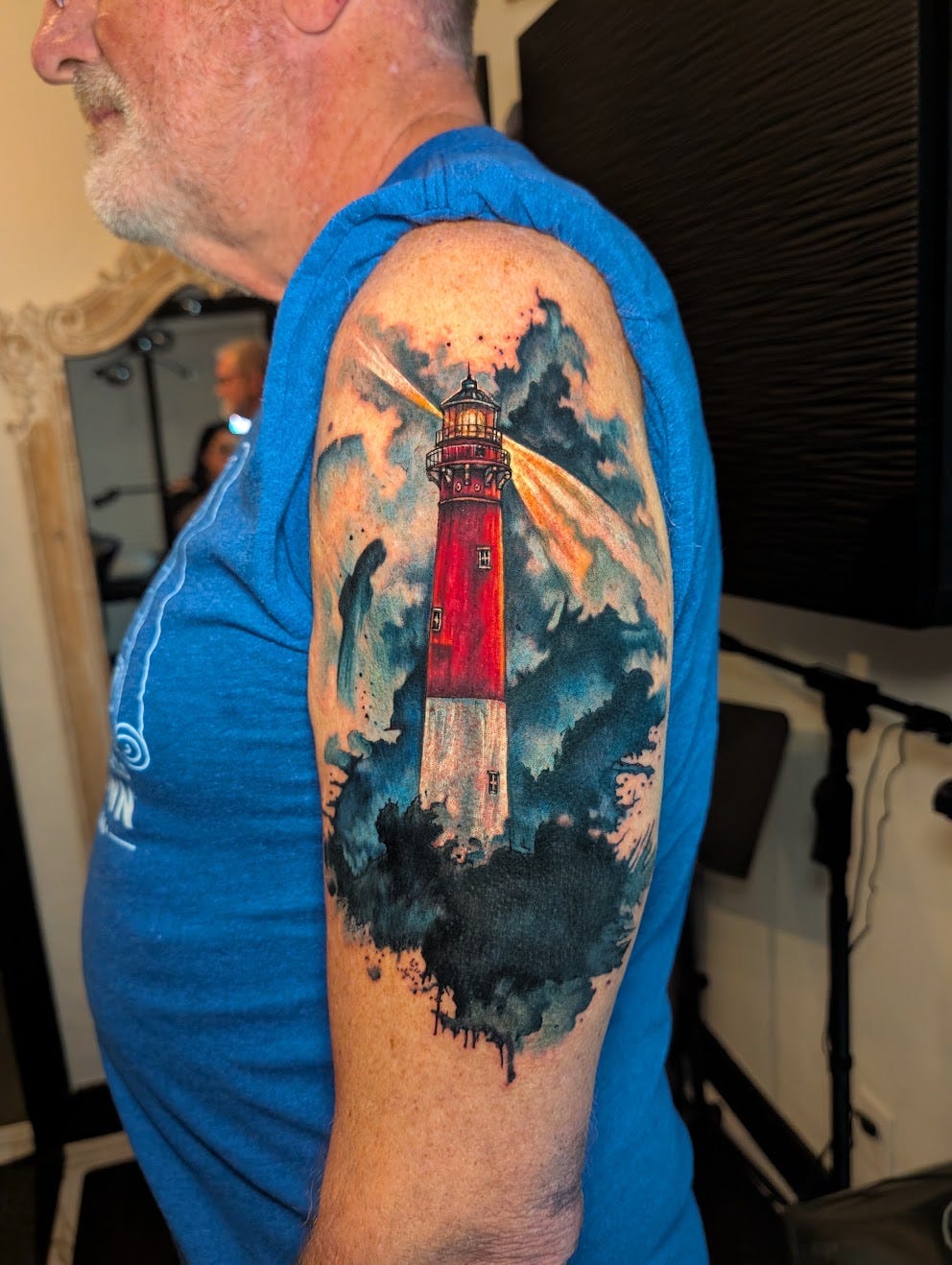
What my lighthouse tattoo says about grief, mental health, and finding a way forward
We talk about the side effects of cancer treatment.
We weigh them against the benefits. We ask how to manage them. We recognize that something meant to help us can also take a toll.
I think we need to make room for that same conversation about advocacy.
Because advocacy has side effects, too.
For me, one of the hardest has been the grief.
The people behind the work
Earlier this year, I was struggling mentally with the loss of so many advocates I knew in the colorectal cancer community.
These weren’t simply names I recognized or stories I had read. These were people who were part of the same world I was. People who understood why this work mattered because they were living it, too.
When you become part of this community, you build relationships. You care about people. You see what they contribute, what they hope for, and what they still want to do.
And then you lose some of them.
The work continues. But so does the grief.
I was trying to keep moving forward while carrying those losses on my back. And that weight was affecting my mental health.
Knowing the work mattered didn’t make it lighter.
A different way to carry them
In March, I had a realization.
What if I stopped trying to carry all that weight on my back?
What if, instead, I added their light to my torch and let it guide my path forward?
That didn’t mean forgetting them. It didn’t mean their deaths suddenly made sense or that I was finished grieving.
It meant I could have a different relationship with what I was carrying.
Their lives could be more than the pain of losing them. Their light—the things they cared about, the connections they made, the ways they showed up—could help me see where to go next.
I didn’t have to leave them behind to move forward.
How that became a lighthouse
Later, while we were in Cascais, Portugal, I visited a lighthouse and learned about the history of its lights.
That experience connected something for me. The torch I had been thinking about became a lighthouse.
And when I thought about which lighthouse belonged on my arm, it was Old Barney: Barnegat Light, from Long Beach Island, New Jersey, where I spent my summers growing up.
A connection to home became a way to carry the people I had lost.
That is the story behind my tattoo.
It is a reminder that their light can guide my path without requiring me to bear the full weight of their loss every day.
Some days, I still feel that weight. The tattoo isn’t a cure for grief. It is a reminder of the realization I want to return to.
We need room for this conversation
I don’t want to turn this into a neat story about transforming pain into purpose.
Advocates already hear plenty about purpose. Sometimes what we need is permission to say that this hurts.
That we miss someone.
That another loss feels like more than we can take right now.
That we need a break without having to explain whether we are still committed to the cause.
I want advocacy spaces where we can talk about the emotional cost as honestly as we talk about the impact of our work. Where checking on one another matters beyond the next event, campaign, or opportunity to share our stories.
And where remembering someone doesn’t always have to become another reason to do more.
Sometimes remembering can simply mean saying their name. Missing them. Giving ourselves room to grieve.
I still believe deeply in advocacy. I also know that believing in the work does not protect me from its side effects.
My lighthouse reminds me that I can keep loving the people we have lost without carrying every loss on my back.
I can add their light to my torch.
And let it help me find my way.
Beautifully written, Tim. And love the new tattoo.
Inspiring post about a tough topic and an awesome tattoo! Hope to see it in person soon.