


When I heard “you have cancer,” five years ago, advocacy wasn’t part of the plan. I was focused on survival. On treatment options. On simply getting through each day. But somewhere along the way, what started as sharing my story evolved into something bigger. A role where I’m helping shape research, mentor other advocates, and build bridges between patients and the institutions making decisions that affect all of us.
2025 was the year all of that came into sharper focus.
From Patient to Research Architect
This year, I deepened my commitment to ensuring that patient voices don’t just participate in research—they shape it from the beginning.
I attended the PCORI Annual Meeting in Washington, D.C. as a Fight CRC Research Advocate, representing patient perspectives in national conversations about how research gets designed and conducted. I served as a CDMRP (Congressional Directed Medical Research Programs) peer reviewer, evaluating grant proposals that will literally determine which cancer research gets funded. I was part of Natera’s steering committee, working alongside scientists, clinicians, and fellow patients to ensure that next-generation diagnostic tools reflect what patients actually need.
These aren’t glamorous roles. There’s no applause at peer review meetings. But there’s something profound about sitting in a room and knowing that when you voice a patient concern or question a research design, you’re potentially changing the trajectory of care for hundreds of thousands of people you’ll never meet.
New Platforms, Deepening Impact
I joined the HOPA (Hematology/Oncology Pharmacy Association) Patient Advisory Council and attended the NCCN (National Comprehensive Cancer Network) Annual Conference—both moves that pushed me into spaces where I could represent the patient perspective in clinical and professional communities that traditionally haven’t had center patient voices.
At the same time, I continued to be a mentor for Call on Congress with Fight CRC, helping newly diagnosed patients find their advocacy voices and teaching them how to translate personal experience into legislative action. It’s work that mirrors my own journey. Showing others that if you’ve had cancer, you already have something important to say.
I also earned the PAN Foundation’s Advocacy Impact Award and served as a state leader for Florida on the hill with PAN Foundation, roles that recognized years of consistent work in connecting patients with policymakers and ensuring our stories inform the laws that govern our care.
The Professional Partnership
Something significant happened this year: I started a job at Raptive as a Community Manager. What made this role special isn’t just the work itself, it’s that Raptive genuinely supports my advocacy efforts. They understand that my commitment to the cancer community isn’t separate from who I am professionally. It’s central to it. Having an employer who recognizes that advocacy work makes you better at your job, not distracted from it, changes everything.
Adventures in Giving Back and Personal Connection
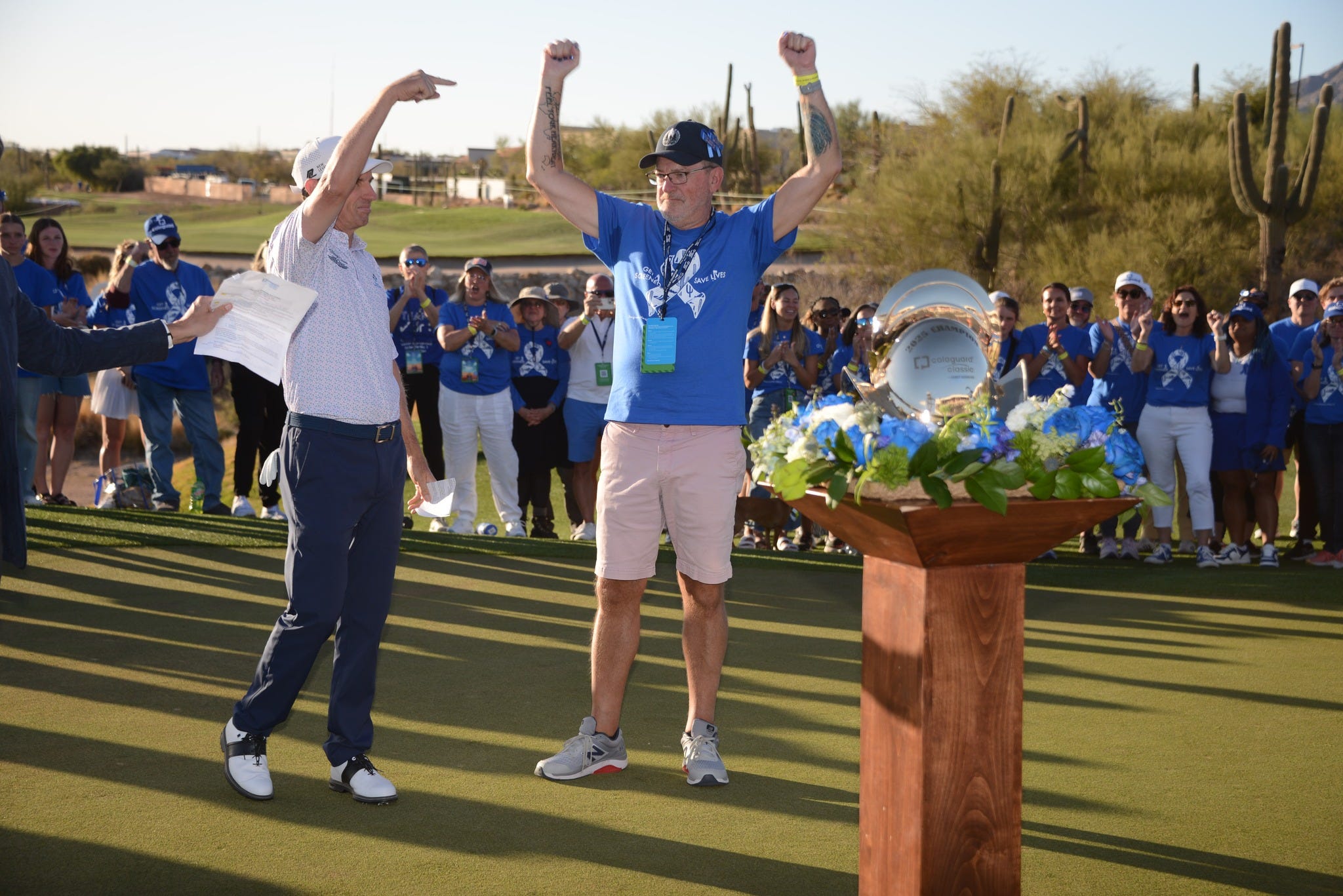
The Cologuard Classic with Man Up To Cancer was a highlight I didn't expect to mean as much as it did. I was paired with Steven Alker—the golfer wore a ribbon with my name during the tournament, and I got to meet him and take a photo on the first tee. But the real highlight? Steven Alker won the tournament. Watching him take it all, while supporting the organizations and cause that helps so many others avoid what I had to endure, felt like everything coming full circle.
I helped host the Gathering of Wolves, Man Up To Cancer’s annual retreat for men navigating cancer and survivorship. Being part of creating that space for other men to show vulnerability, share their stories, and realize they’re not alone—that’s the work that reminds me why I do this.
The Behind-the-Scenes Work
Not all impact is visible. This year, I’ve been working quietly with Share My Liver, helping other colorectal cancer patients navigate the complex journey of finding and working with living donor liver transplants. This is deeply personal work—it’s about connecting patients with resources, answering their questions based on my own experience, and demystifying a path that can feel impossibly complicated when you’re first facing it.
This is the advocacy work that happens in DMs and support groups, in one-on-one conversations where someone desperate and scared finds someone who’s been there and lived to tell about it.
European Adventure and Life Balance
Because advocacy doesn’t mean you forget to actually live: I took an amazing three-week European trip with my wife. We traveled through countries I’d been dreaming about, ate amazing food (pescatarian options were found), and remembered that the fight against cancer is also a fight for life—the good, beautiful parts of it.

What This Year Meant
Looking back at 2025, what strikes me is the diversity of the work. I’m not just a patient or just an advocate or just an employee or just a mentor. I’m all of those things simultaneously. And that intersection—where my lived experience, professional skills, and genuine passion for helping others meet—is where the real work happens.
Five years ago, I never would have imagined I’d be sitting on boards, attending national conferences, mentoring other patients, reviewing research grants, or helping shape clinical decisions. But I also never imagined I’d be five years out from a diagnosis that was supposed to be a death sentence.
The cancer didn’t go away. But my role in the story changed. From being a patient to being an architect—of my own recovery, of resources for others, of conversations that matter.
That’s 2025 in a nutshell.
Here’s to 2026 and whatever comes next.
If you’re navigating a cancer diagnosis or thinking about stepping into advocacy work, know that your story matters. You don’t need permission to start. You just need the willingness to share what you’ve learned.
Find me on social media, check out the Advocacy at Work podcast, or reach out directly. The cancer community is stronger when we show up for each other.
Keep up the good work!